Introduction
The integration of artificial intelligence (AI) into dentistry has ushered in a transformative era for diagnostics and treatment planning. By leveraging advanced machine learning algorithms and computer vision technologies, AI systems now analyze dental X-rays, 3D scans, and intraoral images with unprecedented accuracy, enabling clinicians to detect oral health conditions earlier and more effectively than ever before.
AI in Dental Diagnostics
One of the most significant applications of artificial intelligence lies in early detection and diagnosis. Traditional methods rely heavily on visual examination and manual interpretation of imaging data, which can be prone to human error and subjective variability. AI-powered platforms, however, can:
- Identify early-stage cavities by detecting subtle demineralization on radiographs.
- Assess bone density and structure to evaluate periodontal health.
- Detect suspicious lesions or irregularities indicative of oral cancer or precancerous conditions.
- Provide quantitative assessments that support evidence-based treatment planning.
These capabilities enhance diagnostic precision, reduce the likelihood of missed diagnoses, and allow for earlier intervention, ultimately improving patient outcomes.
Enhanced Imaging Analysis with AI
AI systems utilize deep learning networks, trained on vast datasets of annotated dental images, to recognize patterns that may be invisible to the human eye. For instance:
- Convolutional Neural Networks (CNNs) are widely employed for image classification and segmentation, enabling accurate mapping of affected areas.
- 3D imaging tools, integrated with AI, provide detailed volumetric views for implant planning and orthodontic assessments.
- Automated anomaly detection flags areas requiring further clinical evaluation, ensuring no significant findings are overlooked.
This fusion of artificial intelligence and imaging technology helps dentists make informed, data-driven decisions quickly and reliably.
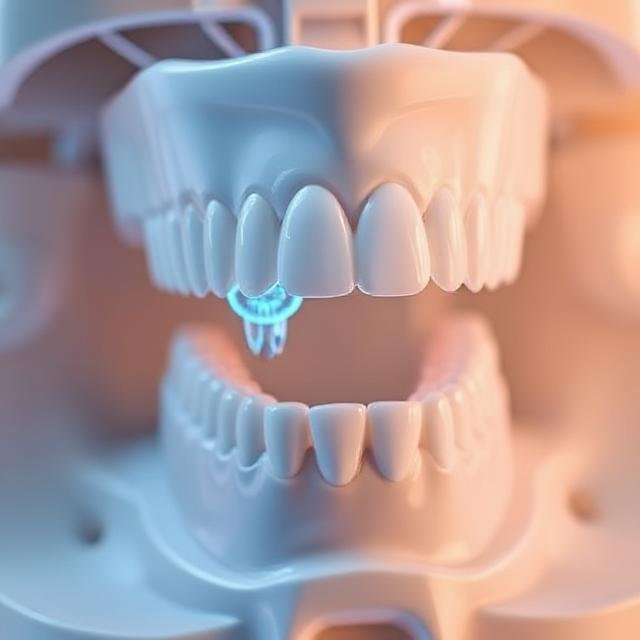
AI in Predictive Analytics and Treatment Planning
Beyond diagnosis, artificial intelligence supports predictive analytics to forecast disease progression and recommend personalized treatment strategies. Examples include:
- Caries risk assessment models predicting future decay based on patient history, oral microbiome data, and lifestyle factors.
- Periodontal disease progression simulations guiding decisions on surgical vs. nonsurgical interventions.
- Orthodontic treatment planning software using AI to visualize tooth movement outcomes and optimize aligner design.
Such predictive tools improve treatment precision, reduce trial-and-error approaches, and enhance patient confidence in proposed care plans.
Applications in Oral Cancer Detection
Artificial intelligence-driven diagnostic systems are showing exceptional promise in oral cancer screening. By analyzing high-resolution images for tissue irregularities, AI models can detect precancerous lesions at much earlier stages than conventional methods. Early detection significantly improves treatment success rates and patient survival outcomes.
Benefits for Clinicians and Patients
The integration of AI in dentistry delivers multiple advantages:
- Increased Efficiency: Automated analyses reduce the time required for image interpretation.
- Standardized Diagnostics: Minimizes variability between practitioners, ensuring consistent clinical outcomes.
- Patient Education: AI-generated visualizations help patients understand their conditions and treatment options more clearly.
- Improved Access: Cloud-based AI tools facilitate remote consultations and teledentistry services, especially in underserved regions.
Ethical and Regulatory Considerations
While artificial intelligence offers substantial benefits, its implementation raises important considerations:
- Data Privacy: Secure handling of patient imaging data remains essential.
- Algorithm Transparency: Clinicians must understand how AI systems generate recommendations to maintain clinical accountability.
- Regulatory Approval: AI-based diagnostic devices require rigorous validation and approval by health authorities before widespread clinical adoption.
Future Directions
As AI technologies evolve, future developments may include:
- Real-time AI diagnostics integrated into chairside imaging devices.
- Multimodal AI platforms combining imaging data with genetic, salivary, and microbiome information for comprehensive risk assessments.
- AI-driven robotics assisting in precise surgical interventions such as implant placement.
These advancements promise to make dentistry more proactive, personalized, and patient-centered.
Conclusion
The adoption of artificial intelligence in diagnostics and treatment marks a pivotal shift in modern dentistry. By enhancing accuracy, efficiency, and predictive capabilities, AI enables earlier detection of cavities, gum disease, and oral cancer, empowering clinicians to deliver higher-quality, patient-focused care. As research and innovation continue, AI is set to become an indispensable tool in the future of oral health.