Introduction: A Paradigm Shift in Dentistry
Dentistry is on the brink of a revolution—one that promises to change how we prevent and treat tooth decay. For decades, the standard response to dental caries involved drilling away decayed portions of a tooth before filling it with synthetic materials.
Now, Guided Enamel Regeneration (GER) introduces a non-invasive, natural, and patient-friendly solution for early-stage cavities. Instead of removing tooth tissue, GER uses biomimetic materials and smart peptides to stimulate the tooth’s own regenerative capacity, rebuilding enamel from within.
This innovation could mean a future where cavities are treated before pain begins—without the dreaded drill.
Understanding Early Tooth Decay
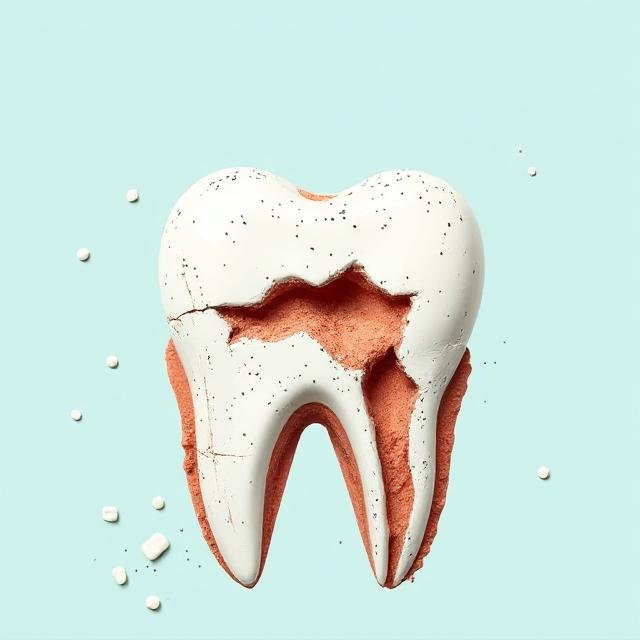
Tooth decay begins when bacteria produce acids that dissolve minerals in the tooth’s protective enamel layer. Initially, this creates white spot lesions—areas of demineralization that are not yet cavities but indicate weakening enamel.
Key points about early decay:
- It’s reversible if detected early.
- It affects millions globally, especially children and adolescents.
- Left untreated, it progresses to cavitation, requiring drilling and fillings.
Traditional dentistry often waits until decay worsens before intervening. GER changes this by acting at the earliest stage to restore tooth structure naturally.
What is Guided Enamel Regeneration (GER)?
GER is a non-invasive dental technique using bioengineered materials to regrow enamel-like minerals in damaged areas. Instead of removing decayed tissue, GER guides natural remineralization with targeted treatments.
The approach involves:
- Biomimetic materials mimicking the tooth’s natural mineral composition.
- Smart peptides that self-assemble into scaffolds, attracting calcium and phosphate ions.
- Controlled delivery systems ensuring precise placement on affected enamel.
Over weeks, the tooth surface regains strength and appearance, often without the need for anesthesia or drilling.
Role of Biomimetic Materials in Enamel Repair
Biomimetic materials replicate the chemical and structural properties of natural enamel. Commonly used materials include:
- Hydroxyapatite nanocrystals: Key mineral in natural enamel.
- Calcium-phosphate-based compounds: Promote crystal growth.
- Bioactive glasses: Release ions that aid remineralization.
These materials create a scaffold for natural minerals to rebuild the enamel matrix.
Smart Peptides: The Game-Changer
Smart peptides are short chains of amino acids designed to self-assemble into nanostructures on the tooth surface. They:
- Attract minerals like calcium and phosphate.
- Trigger natural crystal growth.
- Form a protective, enamel-like layer over lesions.
The result? Natural tooth repair without drilling, filling, or pain.
How GER Differs from Traditional Drilling and Filling
Traditional dentistry focuses on removing damaged tissue and restoring structure with artificial materials. GER, in contrast:
| Feature | Traditional Filling | Guided Enamel Regeneration |
|---|---|---|
| Invasiveness | Drilling required | Non-invasive, no drilling |
| Anesthesia | Often needed | Rarely needed |
| Material | Composite/resin/amalgam | Natural minerals & peptides |
| Longevity | May need replacement | Promotes natural tooth healing |
| Patient comfort | Variable | High |
GER aligns with the minimally invasive dentistry philosophy—preserving natural tooth structure whenever possible.
Clinical Trials and Scientific Evidence
Recent clinical studies show promising results:
- University College London (UCL): Reported 95% success in remineralizing early lesions with peptide-based treatments.
- Chinese Academy of Sciences: Demonstrated full enamel-like mineral restoration in lab studies within two weeks.
- US Trials (NIH-funded): Ongoing research focuses on long-term durability and cost-effectiveness.
Advantages of Guided Enamel Regeneration
- Pain-free: No drilling, injections, or anesthesia for early lesions.
- Natural: Regenerates the tooth’s own minerals rather than replacing tissue.
- Cosmetic benefits: Restores enamel’s natural color and translucency.
- Cost-effective long-term: Reduces the need for repeated restorative work.
- Child-friendly: Ideal for pediatric dentistry where anxiety is common.
Limitations and Current Challenges
Despite its promise, GER faces some challenges:
- Regulatory approvals are ongoing in many countries.
- Material costs remain higher than traditional fillings.
- Dentist training needs expansion before widespread use.
- Long-term durability data is still being collected.
Technological Innovations Supporting GER
Modern dentistry integrates multiple technologies with GER:
- 3D imaging for early lesion detection.
- AI-assisted diagnostics identifying decay before cavitation.
- Robotic delivery systems ensuring precise application of biomimetic agents.
These advances make GER more accurate, predictable, and scalable.
Integration into Modern Dental Practice
For GER to become mainstream, dentists require:
- Continuing education courses in regenerative dentistry.
- Updated insurance codes covering minimally invasive treatments.
- Patient education campaigns highlighting benefits over drilling.
Some dental schools already include GER modules in postgraduate curricula.
Patient Experience: What to Expect During GER Treatment
A typical GER appointment involves:
- Diagnosis: Early lesions detected via imaging or visual exam.
- Tooth cleaning: Removal of surface debris without drilling.
- Application: Biomimetic gel or peptide solution applied to lesion site.
- Follow-up: Reapplication may be needed over several weeks.
Patients report minimal discomfort and no post-procedure restrictions.
Case Studies: Successful GER Applications
- UK Clinics: Early adoption shows 80% reduction in the need for drilling in pediatric cases.
- Singapore Research Center: Combined AI diagnostics with GER to target lesions precisely, improving success rates.
- EU Pilot Programs: Public health systems testing GER in school dental programs with promising outcomes.
Future Prospects: Toward Drill-Free Dentistry
Experts predict that within the next decade:
- GER could replace drilling for most early-stage cavities.
- Nanotechnology may create self-healing dental materials.
- Preventive dentistry will merge with regenerative approaches for holistic care.
A future with fewer dental drills and more natural tooth preservation seems increasingly likely.
Conclusion: Redefining Preventive and Restorative Dentistry
Guided Enamel Regeneration represents a transformational shift in dental care, emphasizing natural healing over invasive treatment. By repairing early tooth decay using biomimetic materials and smart peptides, GER promises a future with fewer drills, less anxiety, and healthier smiles.
As research advances and clinical adoption expands, GER could become the new standard of care, combining prevention, comfort, and innovation for better oral health worldwide.
FAQs on Guided Enamel Regeneration
Q1: Is GER available everywhere now?
A: Not yet. It’s in clinical use in some countries but awaits wider regulatory approvals elsewhere.
Q2: Does GER work for advanced cavities?
A: No, it’s best for early, non-cavitated lesions before drilling becomes necessary.
Q3: How long does GER treatment take?
A: Most appointments last 15–30 minutes, with possible follow-up visits.
Q4: Is it safe for children and pregnant women?
A: Yes. Materials used are biocompatible and non-toxic.
Q5: Will insurance cover GER?
A: Coverage is expanding as procedures gain regulatory approval and clinical acceptance.
Q6: How soon will GER replace traditional fillings?
A: Experts predict widespread adoption within 5–10 years, depending on research and cost factors.